To parents, onlooker play can feel a little concerning. You might see your child standing nearby, watching others play and wonder: Why aren’t they joining in?
But there's often no reason to worry. Onlooker play is a healthy, normal stage of early childhood development, and an important one. It’s typically the first time children show interest in how other kids interact. By observing, they’re learning about social rules, how toys are used, and what it looks like to play in a group.
If your child is quietly watching others instead of jumping in, resist the urge to interrupt. This moment of observation is where early social learning happens.
What is Onlooker Play?
Onlooker play is a stage in early childhood where children watch others play without actively participating. It typically occurs between 18 months and 3 years old, though it can appear at any age when a child is in a new or unfamiliar setting.
While observing, children absorb how play works, including social cues, turn-taking, how toys are used, and group roles. They may comment, ask questions, or stay quietly nearby.
Onlooker play helps build confidence, language skills, and social understanding. It is a key step that prepares children for more interactive play later and is not a sign that something is wrong.
Examples of Onlooker Play
To better understand how onlooker play looks in real life, here are a few common examples:
- A toddler watches older children climb the playground slide but doesn't attempt it yet.
- A preschooler stands near a group building with blocks, quietly observing how others stack or share.
- A child at daycare listens to others role-playing superheroes, but doesn’t join the game.
- During a group art project, one child circles the table, watching peers paint before trying it themselves.
This stage allows children to learn how play works, see how others use toys, and develop social confidence by observing first.
The Role of Onlooker Play in Child Development
Onlooker play isn’t passive; it’s powerful. While it may seem like your child is just watching, they’re actually building key developmental skills.
Some of the ways onlooker play supports development include:
- Learning how play works: By watching others, children start to understand the “rules” of games,how turns happen, how conflicts are handled, and what cooperation looks like, without having to participate yet.
- Absorbing language naturally: Hearing how other children talk during play helps kids tune into new words, sentence patterns, and conversational rhythms in a low-pressure way.
- Building readiness and self-assurance: Observation gives children time to feel oriented before joining in, which can make participation feel less overwhelming and more successful when they’re ready.
- Understanding emotional responses: As they watch peers react to winning, losing, frustration, or excitement, children begin forming their own sense of how emotions show up during shared play.
- Collecting ideas for future play: Watching pretend scenarios unfold helps children imagine roles, storylines, and activities they may later try independently or with others.
These quiet moments of observation lay the groundwork for more active social and cooperative play on your child’s timeline.
How to Support Onlooker Play at Home
It’s natural to wonder if your child should be more social — especially when they spend most of their time observing. But onlooker play is an important step in learning how to join in later.
Here’s how you can support your child during this phase:
- Provide rich play environments – Offer access to outdoor play, nature walks, sensory bins, or art supplies. Let them observe at their own pace.
- Avoid pressure to join in – Don’t prompt them to “go play” or ask why they’re not joining others. Let them absorb what’s happening first.
- Be nearby and available – Sometimes they just want you to be present. Be a calm, quiet presence they can check in with.
- Model curiosity – Instead of pushing interaction, say something like “Wow, that looks fun” or “What are they building?” to spark a connection.
If they’re observing for long periods and seem content, that’s okay. Trust their timeline.
What Are the Other Stages of Play?
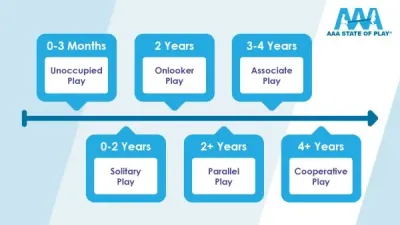
- Unoccupied Play: Babies and young children are reasonably still in their movements, and their play looks scattered. They mostly focus on exploring materials available to them and practice manipulating the materials.
- Solitary Play: Children play alone. This sometimes worries parents, but it shouldn't! Children at this stage are mastering new motor and cognitive skills and exploring the idea of play.
- Onlooker Play: Children watch other children playing without joining in. This gives children a chance to learn about peer interactions and how other children manipulate play materials.
- Parallel Play: Children play adjacent to each other but don't actually interact with each other. They may occasionally look at the other child or children and copy what they are doing.
- Associative Play: This is the stage of play when children start expressing interest in interacting with each other. They put into action what they observed during onlooker and parallel play and start practicing their social skills.
- Cooperative Play: At this stage, children make group goals for play, establish rules, and work through conflicts.
Frequently Asked Questions About Onlooker Play
At what age does onlooker play start?
Onlooker play typically begins between ages 2 and 3.5, though every child develops at their own pace. It often appears as toddlers become more curious about others, but may not yet feel ready to join group play.
Should I encourage my child to join in instead of just watching?
It’s best not to push. Onlooker play supports confidence-building and helps children decide when they’re ready to participate. Stay supportive and nearby, but let them take the lead.
Is onlooker play a sign of shyness or a social issue?
Not usually. Onlooker play is often mistaken for shyness, but it's a healthy form of observation. Most children eventually shift into more interactive play when they feel ready.
When should I be concerned about onlooker play?
If your child consistently avoids interaction across many settings and doesn’t show interest in peers over time, it may be helpful to talk to a pediatrician or child development specialist.
See also: Unoccupied Play: What it is and Why it is Important