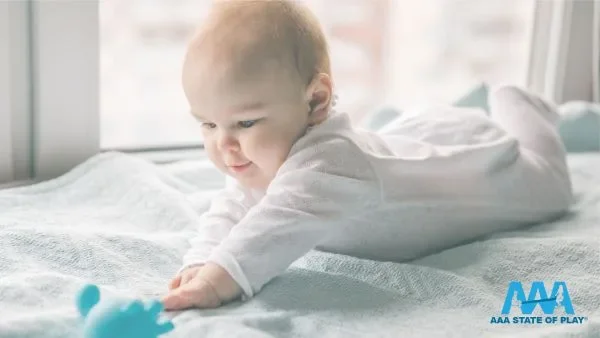
Unoccupied play is the earliest stage of play, where babies move or observe without a clear goal. Though it may look random, these actions help infants build body awareness, process their surroundings, and begin interacting with the world.
Infants engage in movements as a way to test out their physical capabilities and start building essential skills. These early actions are precursors to more advanced play behaviors, and they mark the very beginning of a child's lifelong relationship with play and learning.
What is Unoccupied Play?
Unoccupied play is the earliest form of play, usually seen in infants from birth to about three months. It may look like scattered movement, such as kicking, waving arms, or staring into space. In reality, it is how babies begin to explore their bodies and surroundings. There is no specific goal or toy involved, just natural, self-led discovery. This stage lays the foundation for all future play and learning.
Unoccupied Play in Practice with Real Life Examples
Unoccupied play doesn’t need toys or structure. It happens when babies have space and time to move freely and observe their surroundings. Here are a few examples parents might notice at home:
- Lying on their back and kicking their legs: Your baby may move their legs up and down, sometimes rhythmically, without aiming at anything. This builds leg strength and body awareness.
- Watching light or shadows move: A ceiling fan, curtain, or sunlight pattern can hold their attention as they track movement with their eyes.
- Looking at their own hands: Your baby might bring their hands close to their face and stare at them, slowly turning them or moving their fingers.
- Making sounds while alone: Cooing, babbling, or experimenting with pitch helps babies explore their voice and listen to cause and effect.
- Waving arms or twisting their body: These spontaneous movements give them practice with balance and coordination.
These moments may seem small, but they are your baby’s way of exploring the world on their own terms. Give them a safe space and let them lead.
Benefits of Unoccupied Play for Development
Unoccupied play supports several key areas of early development. Even when it looks like “downtime,” babies are actively learning in the following ways:
- Body awareness: Moving arms, legs, or fingers helps infants learn where their body is in space and how it moves.
- Muscle control and coordination: Repeated, self-directed motion builds strength and sets the stage for future motor skills like rolling or grasping.
- Sensory processing: Watching light move or listening to their own sounds helps babies begin to process and respond to sensory input.
- Focus and attention span: Quiet observation allows infants to practice concentrating on sights, sounds, and sensations at their own pace.
- Curiosity and independence: With no outside instructions, babies follow their own interests. This builds confidence in exploring the world.
Unoccupied play is not a pause in development. It is where foundational skills begin.
How to Support Unoccupied Play at Home
Supporting unoccupied play at home is simple and doesn’t require any special equipment. Start by giving your baby a safe, open area to move freely, such as a soft blanket on the floor or a clean play mat. Keep the environment calm and quiet to help your baby focus on small details like light, sound, and their own movements. During this time, it’s best to let your baby lead. Avoid repositioning or entertaining them unless needed. Instead, observe quietly and allow them to explore at their own pace.
Natural lighting, gentle shadows, or simple visuals like a slowly moving ceiling fan can encourage curiosity without overstimulating them. Most importantly, stay nearby. Your presence helps your baby feel secure, even if you’re not actively engaging with them. By creating this kind of space, you’re giving your baby the freedom to explore, process, and learn on their own.
What Are the Other Stages of Play?
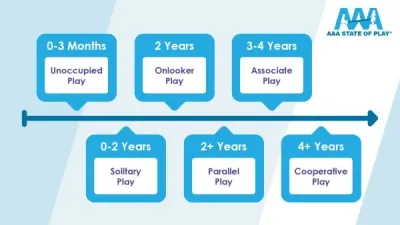
- Unoccupied Play: In this earliest stage, babies appear still or move without direction. Their play may seem scattered or passive, but they are actively taking in their surroundings and testing how their bodies and nearby materials respond.
- Solitary Play: Children engage in play by themselves, focusing intently on their own activities. Though it may seem isolating to adults, it’s a critical time for building new physical and thinking skills without distraction.
- Onlooker Play: Children observe others playing, often without joining. Watching from the sidelines allows them to learn how peers interact and use toys, setting the groundwork for future social involvement.
- Parallel Play: Children play near one another, using similar toys or materials, but without direct interaction. They are aware of each other and may mimic each other's actions while remaining focused on their own activity.
- Associative Play: This stage marks the beginning of shared interest. Children begin interacting and talking during play, but activities are still loosely organized. They begin to apply what they’ve learned about social interaction and communication.
- Cooperative Play: Children now work together toward shared play goals. They negotiate roles, create rules, and solve problems as a group. This stage reflects stronger communication, empathy, and teamwork.
Frequently Asked Questions About Unoccupied Play
Does unoccupied play mean my baby is bored?
No. It may look like boredom or inactivity, but your baby is actually learning by observing, moving, and processing their environment.
Is it okay if my baby just stares into space?
Yes. Staring into space is a common part of unoccupied play. It often means your baby is focusing or taking in sensory information.
Do I need to entertain my baby during unoccupied play?
Not during this stage. It’s best to give your baby a safe, open space and let them explore on their own. Quiet observation is enough.
Can unoccupied play happen in older children?
Yes, though it looks different than in infants. Older children might show unoccupied play by daydreaming, wandering, or quietly watching others before joining in. While it's less common, it can be a natural part of their social or cognitive development.
See also: What Is Onlooker Play? A Key Stage in Child Development