
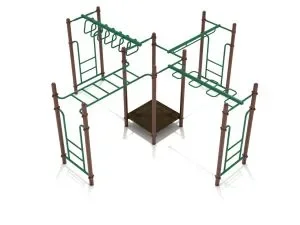
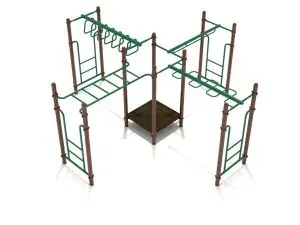
Physics isn't just something you learn about in a classroom: It's something that happens all around you, especially on the playground! Every time you swing, jump, slide, or spin, you're actually experiencing important science concepts in action. When you push off on a swing, you're using force to move, and gravity brings you back down. When you race down a slide, friction between you and the surface determines how fast you go. Even something as simple as tossing a ball involves energy, motion, and the pull of gravity. By paying attention to these everyday physics moments, you're not just having fun; you're training your brain to think like a scientist, solve problems, design better games, and even invent cool new ways to play.
The Science of Play
Play is a key part of growing up. Whether you're running around with friends, making up stories, or solving puzzles, play helps kids develop essential life skills while boosting emotional well-being. Early childhood is the perfect time to learn through play, and here's why:
- Making Friends: Playing with others teaches kids how to share, take turns, and work together, building important social skills.
- Better Focus: Active play helps you concentrate better in school and strengthens brain development, making learning easier.
- Language Skills: Games that involve storytelling, role-playing, or word challenges can improve vocabulary and communication.
- Growing Minds: Pretend play can help you explore and understand new ideas.
- Support for Neurodivergent Kids: Play can help kids who need more practice interacting with others.
- Stronger Family Bonds: Playing together helps families connect, creating closer relationships and better communication.
- Less Stress, Better Sleep: Play is a natural stress-reliever that helps kids relax and develop healthy sleep patterns.
- Problem-Solving Power: Play encourages creativity and critical thinking, skills that are useful for a lifetime.
From the playground to the classroom, play is one of the best ways for kids to learn, grow, and prepare for the future.
- The Science Behind Play
- The Science of Play: How Play Impacts Brain Development
- How Play Helps Children's Development
- Pretend Play and the Development of Children's Language Skills
- How Play Might Improve Childhood ADHD
Benefits of Integrating Science Into Play
When science is mixed with play, it can become an exciting adventure. Fun, hands-on activities can help kids learn about scientific ideas in a way that sticks, building a strong foundation in science, technology, engineering, and math (STEM). There are lots of reasons why adding science to play is so powerful:
- Improved Engagement: Kids are more eager to learn when they're having fun, especially when exploring topics that spark their curiosity.
- Hands-On Discovery: Play provides a real-world setting for you to experiment and explore science in action.
- Curiosity Booster: Interactive experiences make kids ask more questions, which helps you learn more.
- Problem-Solving Skills: Through trial and error, kids learn resilience, teamwork, and how to tackle challenges.
- Better Understanding: Learning through play helps kids connect scientific concepts to real life instead of just memorizing facts.
- STEM Confidence: The more you explore science through play, the more comfortable and confident you'll become when you're learning STEM subjects.
- Math Skills: Science activities often introduce counting, measuring, and recording numbers in a fun way.
- Scientific Thinking: Play encourages kids to observe, ask questions, experiment, analyze results, and share discoveries just like real scientists!
By making science part of playtime, you can have fun and also build the skills and confidence to become curious, lifelong learners.
- Science Matters: Bringing Science Into Children's Play
- Playing With Science: Manifestation of Scientific Play in Early Science Inquiry
- Why Is Science Play Important in Early Childhood?
Ways to Bring Science to the Playground
Turning a playground into a science lab is easier than you think. With a little creativity, everyday play structures and outdoor spaces can become exciting places for kids to explore science while having fun.
Outdoor Science Experiments
Little kids can mix water, soil, and leaves to make mud pies, learning about textures and states of matter. Kids of any age can start a garden or compost bin to observe plant life cycles and decomposition. A nature scavenger hunt is another fun way to boost observation skills while learning more about the world.
Exploring Nature
The playground is the perfect place to learn about wildlife. Build an "insect hotel" made from wood, bamboo, or bricks to provide a close-up look at how bugs live. Hang a bird feeder to invite feathered visitors to identify and observe. You can also plant seeds in different playground areas and compare how they grow based on the sunlight, soil, or water conditions, turning the playground into a living science experiment.
- How to Explore Science at the Playground
- Five Easy Ways to Bring Science Into Play With Children
- Nine Outdoor Stem Activities That Bring Science Learning Out Into Nature
- Fun Outdoor Science Activities for Kids
- 19 Fall Science Activities
Play With Physics
The playground is a perfect place to experience physics in action. Every swing, slide, and seesaw demonstrates important scientific principles in a hands-on way.
- Pendulums: The rhythmic movement of a swing acts like a pendulum, showing how gravity and momentum work together.
- Ramps: A slide's slope introduces kids to how inclined planes work.
- Levers: Playing on a seesaw helps kids understand balance, force, and how levers make lifting easier.
- Forces: Climbing and spinning activities reveal how different forces, like pushing, pulling, and tension, affect movement.
- Gravity: Whether jumping, running uphill, or going down a slide, kids constantly experience the force of gravity.
- Friction: Holding onto monkey bars, stopping a swing, or sliding on different surfaces demonstrate how friction slows or controls movement.
- Balance: Walking across a balance beam or balancing on one foot teaches coordination and weight distribution.
- Light: Playing with shadows, reflections, or water can introduce kids to the science of light and how it bends and bounces.
- Fun Physics Activities for Kids
- How Playing on Swings Can Help Children Understand Physics
- Exploring Ramps and Friction With a Playground Slide
- Playground Science
- Playground Sized DIY Marble Run
Math Games
With a little creativity, the playground can become a giant math lab where you can explore numbers, patterns, and problem-solving through movement and games. One of the easiest ways to bring math to playtime is with sidewalk chalk. A simple hopscotch grid can help you practice counting, skip counting, addition and subtraction, or more advanced skills, depending on what you write in the boxes. Number sequences and shape games can also turn an ordinary sidewalk into a hands-on learning space. For a fun way to explore time, kids can build their own sundials and track how shadows move throughout the day. Even everyday playground activities like measuring jumping distances, racing against a timer, or counting swings can make math feel like a game.
- Fun, Free Math Activities for Elementary-Age Students
- Four Engaging Mathematical Games You Can Play With Children Today
- Math on the Playground
- 15 Best Outdoor Math Games for Your Child
- Five Engaging Outdoor Math Activities for Older Kids
Additional Information on Physics on the Playground
- Playground Physics Lesson Plan
- Physics on the Playground
- Forces and Energy on the Playground
- Playgrounds Offer the Perfect Setting for First Physics Lessons
- Serious Physics on a Playground Swing With Toys, Your Own Body, and a Smartphone
- Getting to Grips With Science
- Playground Physics: On a Roll!
- Non-Inertial Playground Physics
- Playground Equipment
- Physics on the Playground
- How Playing on Swings Can Help Children Understand Physics