

Playground safety for children depends on active supervision, age-appropriate equipment, clear play boundaries, hazard awareness, and proper clothing and footwear. Parents, caregivers, and teachers can reduce playground injuries by teaching children where to play, how to watch for unsafe conditions, when to ask for adult help, and which equipment to avoid.
Playgrounds are fun places for children of all ages. They are filled with swings, slides, climbing structures, games, and other activities designed to keep kids active and engaged. However, playgrounds are not always safe for every child in the same way. Some children face greater risk because of their age, developmental stage, physical ability, medical needs, or the condition of the play area.
No matter your child’s specific risk factors, it is important to know how to keep them safe in an outdoor play area. Children who visit playgrounds regularly need clear rules, visible supervision, and safe equipment. Letting children wander away from the playground, use equipment that is too advanced for them, or play near unsafe areas can increase the risk of injury. Parents and caregivers can help by knowing what safety precautions to take before and during play.
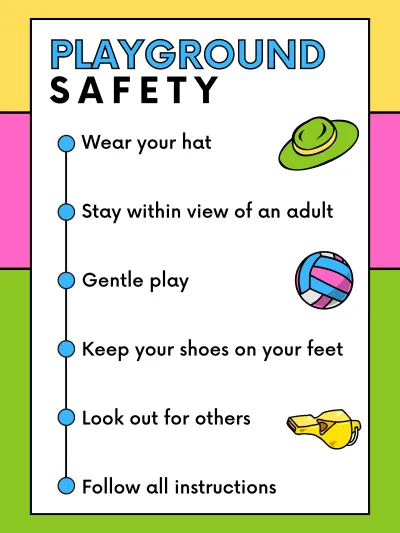
Tips to Keep Children Safe at Playgrounds
There are many ways to help children stay safe while they play outside. You can teach children to look out for one another, help them understand which areas are safe for play, stay alert while they explore, avoid unsafe playground equipment, and make sure they wear proper clothing and footwear.
Teach Children to Be Spotters
Teaching children to be spotters can help them become more aware of the people and hazards around them. A spotter is someone who watches out for others during physical activity and is ready to help or call for help if something goes wrong.
Children can learn to use this same idea in a playground setting. Teach them to look out for friends who may be slipping, falling, climbing too high, or using equipment in an unsafe way. Make sure they understand that they should not try to handle a serious injury on their own. If someone gets hurt, they should run to an adult immediately.
Children should also know which hazards should not be touched. Sharp objects, broken glass, hornet’s nests, garbage, damaged equipment, and unknown items should be reported to an adult. This teaches children that playground safety is not only about how they play, but also about recognizing unsafe conditions.
Teach Your Children Which Areas Are Play-Safe
Not every area around a playground is safe for play. Children should know which spaces are meant for play and which areas are off limits. Unsafe locations can include parking lots, park entrances, roadways, wooded edges, maintenance areas, drainage zones, and spaces outside the playground boundary.
Help children recognize clear safety markers. These may include fences, borders around a mulched area, rubber surfacing, turf areas, signs, or other visual boundaries. Children should understand that the safe play area is where the playground equipment and protective surfacing are located.
This is especially important in public parks, school playgrounds, and community play spaces where children may be tempted to run beyond the equipment area. A child who knows where the play-safe area begins and ends is less likely to wander into traffic, parking areas, or other unsafe locations.
Stay Alert and Communicate
Active supervision is one of the most important parts of playground safety. Children need room to play independently, but they still need an adult who is alert, visible, and ready to respond.
Choose times to visit the playground when you are not rushed, distracted, or too tired to supervise well. Make sure your child can see where you are while they play. They should also know how to get your attention quickly if they feel unsafe, get hurt, or notice a hazard.
Regular check-ins can also help. Checking on your child every 15 to 30 minutes can make a difference, especially in a large park or busy playground. For younger children, children with disabilities, or children using equipment that is new to them, closer supervision may be needed.
Avoid Unsafe Equipment
Playground safety is difficult when children are using damaged, worn, or age-inappropriate equipment. Before allowing children to play, take a quick look at the condition of the playground.
Watch for rotting wood, rusting metal, loose bolts, cracked plastic, broken guardrails, sharp edges, missing parts, excessive wear, or equipment that leans or looks unstable. If a structure does not look safe, ask children not to use it and report the concern to the property owner, school, park department, or facility manager.
Age-appropriate equipment matters, too. A climber, slide, or overhead event that may be safe for a six-year-old may not be safe for a three-year-old. Children should use playground equipment that matches their age, size, strength, balance, and coordination.
Provide Proper Clothing and Footwear
Proper clothing and footwear can help reduce playground injuries. Shoes should fit well, stay securely on the child’s feet, and provide traction while running, climbing, and landing.
Non-slip shoes with grip soles are usually safer for playground use than flip-flops, open-toed sandals, or loose shoes. Open-toed shoes can expose children to cuts, stubbed toes, and caught footwear. Flip-flops and similar shoes can trip a running child and lead to falls.
Clothing should also be playground-safe. Avoid clothing with long drawstrings, loose straps, or accessories that could catch on playground equipment. Children should be able to climb, slide, swing, and run without clothing or footwear creating an added hazard.