
Key Findings
- The author argues that the playground industry plays an outsized role in writing the rules governing the products it sells.
- In the author’s view, ASTM’s committee-balance safeguards protect the vote but do not determine who can regularly attend the working groups where language is drafted.
- The author argues that safety standards should prioritize unaffiliated, impartial expertise over access to volunteer meetings.
- The author discloses that his company sells tall structures, builds to F1487, belongs to IPEMA, and benefits from the system he is criticizing.
How the standard works
Most people don’t lie awake at night thinking about playground safety rules. But lately, I’ve been troubled by them. In an era where corporations increasingly write their own regulations, the playground industry is no exception, and I don’t think the way we’ve set it up serves kids as well as it should.
Public playgrounds in the US are, in effect, required to comply with a standard known as ASTM F1487. In layman’s terms, F1487 sets out specific rules for what a playground has to have in order to be considered compliant. I say “in effect” because, although no federal law or statute mandates F1487 compliance, entities like courts, insurers, and state licensing boards typically use this standard to come up with the legal definition of care, and noncompliance won’t bode well for a playground operator in the case of a lawsuit.
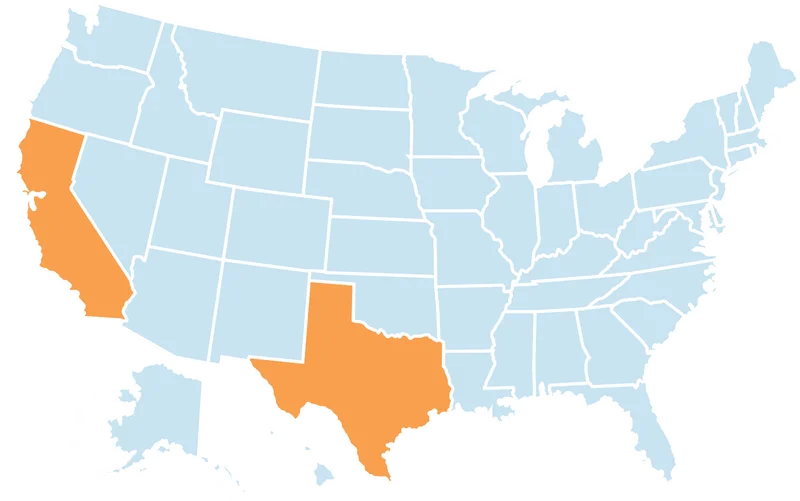
A handful of states go further. Texas conditions public-fund playground purchases on compliance with “ASTM Standard F1487-07ae1,” a specific edition of the standard that is now roughly nineteen years and several revisions out of date. California requires conformance to ASTM playground standards, with the naming left to its implementing regulations.
The industry at the table
In practice, the playground industry gets to play an outsized role in writing the rules governing the products they sell.
Take IPEMA for example. The International Play Equipment Manufacturers Association is a non-government trade association that provides third-party certification for commercial playground equipment. IPEMA states its mission is to “serve as the voice for the public playground industry, communicate with and educate members and related audiences, and provide certification programs.”
The problem isn't with IPEMA's certification, but with how its board is structured. All ten of its board seats are held by people from the companies whose products IPEMA certifies: seven equipment manufacturers and three surfacing suppliers. IPEMA publishes the roster, and every seat and employer on it is public. Anyone can check it. As an industry, we're falling into the same trap as many industries frustrated with what they perceive as overregulation: we believe that we know better than we actually do.
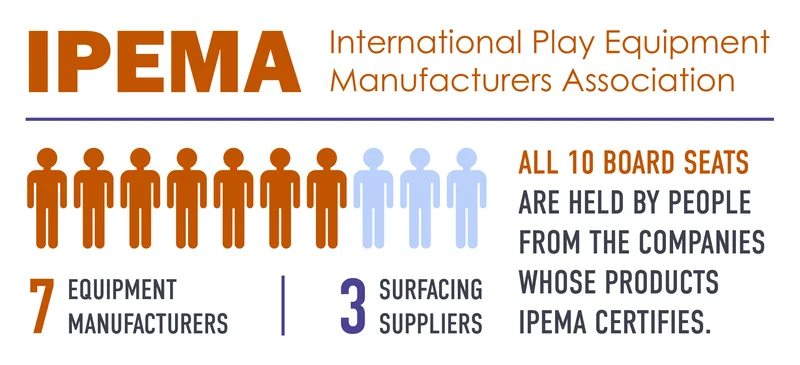
All board seats are held by people from the companies whose products IPEMA certifies: 7 equipment manufacturers and 3 surfacing suppliers.
I’m ambivalent about whether the playground industry needs more or less governmental oversight. I’d be fine with a third-party oversight board made up of unaffiliated playground safety experts. But I don’t think it benefits anyone to pretend that the same people who profit from the equipment they sell should also be in charge of deciding whether or not that same equipment is safe.
And that gets into another issue. Not only is IPEMA’s board comprised of industry insiders, IPEMA members also sat on the committee that developed ASTM F1487. That is to say, the same rule used by governments and insurers to determine safety compliance was written, in part, by the people who are supposed to be following that rule.
On paper and in practice
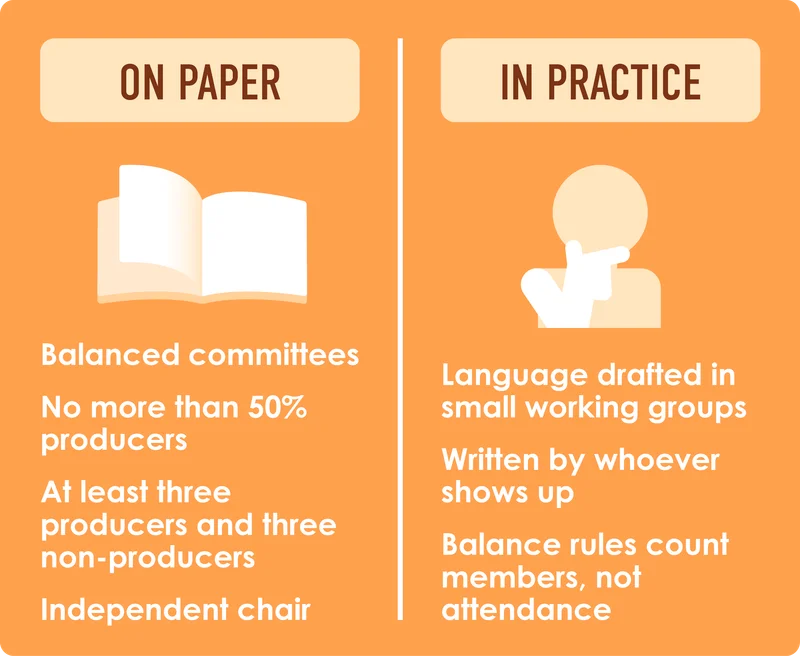
ASTM does have rules meant to guard against exactly this. Committees and subcommittees that write standards for products sold commercially have to be classified and balanced: voting users, consumers, and general interest members must equal or exceed voting producers, and producers can hold no more than half the vote. That requirement applies at the subcommittee level, where F1487 actually lives, not only at the main committee above it. Classified subcommittees also have to carry at least three producers and at least three non-producers. On paper, manufacturers cannot outvote everyone else, and the chair of the F1487 subcommittee isn’t a manufacturer at all — he spent three decades running a park district before he took the seat.
I want to be fair about that, because it’s a better arrangement than most industries operate under. But it protects the vote, and the vote is the last step. The language gets drafted long before anything reaches a ballot, in small working groups, largely by whoever shows up to every meeting. Balance rules count members. They don’t count attendance.
On paper
- Balanced committees
- No more than 50% producers
- At least three producers and three non-producers
- Independent chair
In practice
- Language drafted in small working groups
- Written by whoever shows up
- Balance rules count members, not attendance
Who can afford to show up?
So why are manufacturers in that room? We have a vested, financial interest in standards changes. When the language changes, we’re the ones paying for the engineering time, the redrawn product line, and the revised installation guidance, which means we have both the strongest incentive to shape that language and the budget to send someone to every annual meeting. A parks director who has to live with the result doesn’t have that budget, nor does a pediatric injury researcher.
Nobody has to be acting in bad faith for that to produce a bad outcome. It only has to keep being true that the companies paying for compliance are the only ones who can afford to show up and write it.

Tall structures and a slow process
ASTM has acknowledged the trend toward taller towers, noting that some now rise thirty feet from the ground. In February 2022, the subcommittee opened a work item, WK81117, aimed at reducing the risk of children climbing and falling from the exterior of tall structures and enclosed slides. It cleared the main committee ballot in December 2024 and is still working its way through final approval. Related work has already landed: the 2025 revision of F1487 added a definition for a fully enclosed structure.
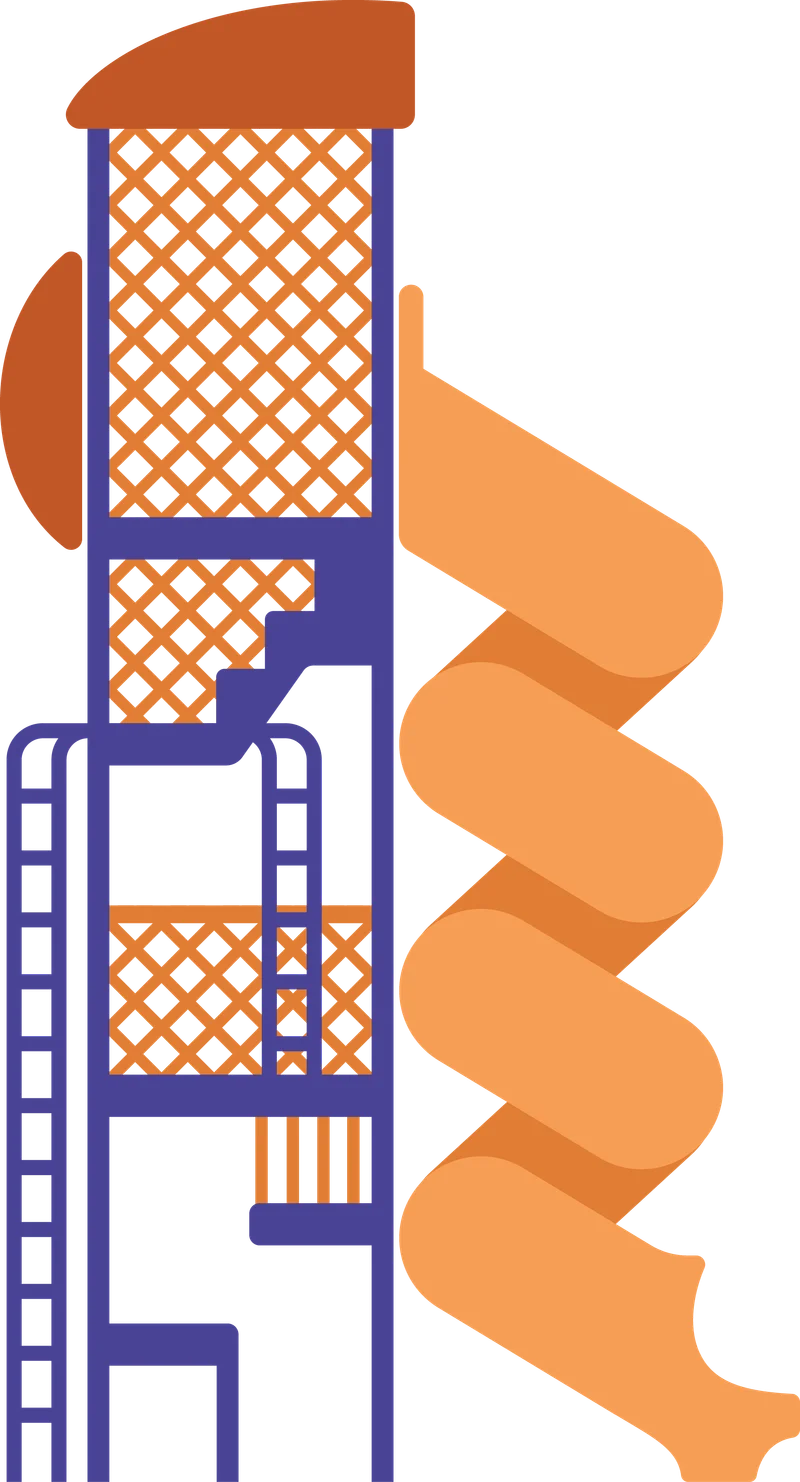
So the system works. But “industry captures regulator” is an easy story to tell and this isn’t quite that story. What I’d point at instead is the clock. The subcommittee chair describes the hazard as kids using slide flanges as footholds to climb the outside of structures designers said you couldn’t fall from. It took most of three years to clear a first ballot, and four years on, it remains unfinished. Nobody obstructed it. It moved at the speed of a volunteer process that the companies selling the towers can afford to attend every year and almost nobody else can.
A chair inside the industry
And the same goes for me. My company sells tall structures. We build to F1487, our equipment is IPEMA certified, and when WK81117 finishes clearing approval, we’ll be one of the companies that has to redesign to meet it. That isn’t free, and I’m not going to pretend it is. But I’d rather it happen. A standard I have to comply with is worth more to me than a standard I helped write, because the first one means something to a parent and the second one only means something to my lawyer. I’m not writing this from outside the industry. I’m writing it from a chair inside it, about a system I benefit from.
To be clear: I’m not aware of, and I’m not alleging, any specific improper payment, agreement, or act of self-dealing by any individual. My criticism is of what’s a matter of public record, not of anyone’s honesty. I’d guess most of the people on the board sincerely believe they’re the best qualified to answer hard questions, and on the engineering side, many of them probably are. But everyone in every industry believes that about themselves, right up until someone from the outside looking in asks who exactly is checking the work.
Expertise over access
I think our industry should prioritize expertise over access when it comes to creating safety standards. Bringing on unaffiliated, impartial experts to develop ASTM standards would help create safety standards that hold up as objective measures rather than industry consensus.
As a parent, I don’t want there to be any question as to whether playground safety standards were created with the best interests of kids in mind. As the CEO of a playground equipment company, I don’t want my competitors dictating what “safety” is supposed to mean. And I’d rather be held to a rule I had no hand in writing than keep defending one I did.

Nic Breedlove is the CEO of NVB Playgrounds, Inc. NVB is an IPEMA member and its equipment is IPEMA certified. The views here are his own.
Theory vs. Practice
Theory
- Playground companies have a vested interest in the safety of the equipment they sell, so it’s natural that their executives would want a say in how safety is decided.
- Lack of government red tape helps prevent arbitrary regulations from hampering the innovation of the playground industry.
Practice
- By failing to entrust high-level safety standards to independent subject-matter experts, the playground industry makes accidents more likely.
- Giving outsized importance to the input of industry insiders makes national safety standards less valuable as objective measures of safety.
Next, consider why numbers don’t build great playgrounds.
How to Cite This Chapter
Breedlove, Nicolas. “The Rules Are Written by Whoever Shows Up.” State of Play 2026, Chapter 5, AAA State of Play, September 2026. https://www.aaastateofplay.com/state-of-play/rules-are-written-by-whoever-shows-up/