
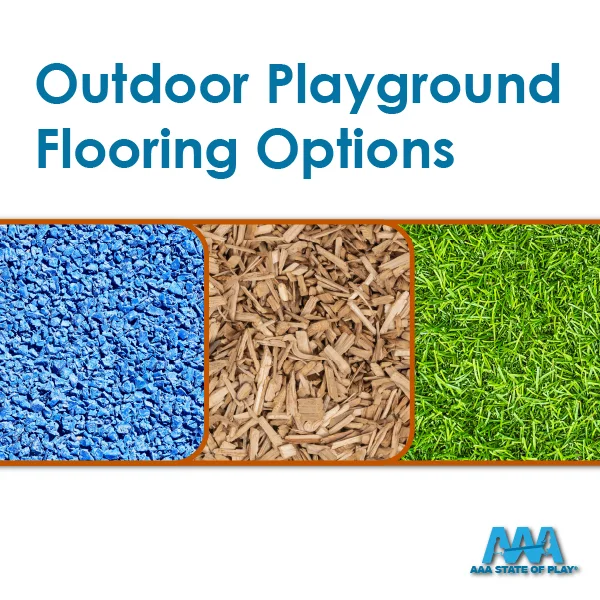
Outdoor playground flooring options include wood chips, artificial grass, rubber mulch, rubber mats, rubber safety tiles, and poured-in-place rubber surfacing. The best choice depends on fall height protection, accessibility needs, maintenance capacity, drainage, budget, and the type of playground equipment being installed.
After selecting slides, swings, climbers, and other playground equipment, the surface underneath the play area becomes one of the most important safety decisions. Playground surfacing helps cushion falls, supports daily use, affects accessibility, and influences long-term maintenance costs. A surface that looks affordable on day one may require more upkeep over time, while a higher-cost surface may provide better access, cleaner appearance, and lower maintenance demands.
Playground Wood Chips
Playground wood chips are one of the most common loose-fill surfacing options for outdoor play areas. They are popular because they have a lower upfront cost and can provide impact attenuation when installed at the correct depth for the equipment’s fall height.
Wood chips can help cushion falls from slides, climbers, and elevated decks, but they require routine maintenance. Loose-fill material can shift under swings, at slide exits, and in high-traffic routes. These areas should be raked, leveled, and replenished as needed so the surface does not become too thin to provide proper fall protection.
Wood chips may be a practical option for schools, parks, churches, and community spaces that need a cost-conscious playground surface and have staff available for regular inspections and upkeep.
Artificial Grass
Artificial grass, often called playground turf, creates a clean and even play surface with a natural-looking appearance. It is often used in playgrounds where buyers want a softer, more finished surface without loose materials being tracked around the site.
Playground turf can be especially useful in early childhood play areas because it provides a stable surface for crawling, walking, and assisted movement. It does not need to be raked or topped off like loose-fill surfacing, but it still needs proper base preparation, drainage, and impact-rated padding beneath the turf when used under playground equipment.
Artificial grass can be a strong option when appearance, accessibility, and low daily maintenance are important priorities.
Playground Rubber Mulch
Playground rubber mulch is another common loose-fill surface used under commercial playground equipment. It provides shock absorption, can be made from recycled rubber, and is often chosen as a lower-cost alternative to unitary rubber surfacing.
Rubber mulch can help reduce injury risk from falls when installed at the correct depth and maintained properly. Like wood chips, it can move out of place in high-use zones such as swing bays, slide exits, and spinning equipment areas. Buyers should plan for routine leveling and depth checks.
Rubber mulch is often a good fit for playgrounds that need a more resilient loose-fill option but still want to control upfront surfacing costs.
Kids’ Outdoor Rubber Safety Mats
Outdoor rubber safety mats are commonly used in high-impact areas where loose-fill materials are more likely to shift. These include the bottom of slides, underneath swings, around spinners, and near merry-go-rounds or teeter-totters.
Rubber mats can be used with wood chips or rubber mulch to reduce displacement in the busiest parts of the playground. This can lower maintenance needs and help keep protective surfacing in place where children are most likely to land or drag their feet.
For many playgrounds, rubber mats are not the entire surfacing system. They are a practical add-on that helps strengthen specific use zones.
Playground Safety Mat Tiles
Playground safety tiles create a more stable and uniform surface than loose-fill materials. These rubber tiles are available in different thicknesses to support different fall height requirements. When installed correctly, they create a firm surface that does not shift out of place like mulch.
Safety tiles can be a good option for buyers who want a cleaner, more accessible, and lower-maintenance surface without choosing poured-in-place rubber. They can also be easier to repair in sections because individual tiles may be replaced if damaged.
Rubber safety tiles are often used in schools, daycare centers, parks, and community playgrounds where accessibility and predictable surface performance are important.
Poured-in-Place Rubber Playground Flooring
Poured-in-place rubber surfacing is a seamless unitary surface that is often chosen for playgrounds needing strong accessibility, design flexibility, and lower routine maintenance. It can be installed in different colors, patterns, and thicknesses depending on the equipment, fall height, and site design.
This surfacing option is popular because it does not need to be raked, topped off, or redistributed after heavy use. It also provides a smooth surface for wheelchairs, walkers, strollers, and children with mobility needs when installed according to accessibility requirements.
Poured-in-place rubber usually costs more upfront than loose-fill materials, but it can be a strong long-term choice for public playgrounds, schools, inclusive play spaces, and high-use community areas.
How to Compare Playground Flooring Options
The right playground flooring is not just the cheapest material. Buyers should compare each option based on safety, maintenance, accessibility, drainage, durability, and total cost over time.
A simple comparison should include:
Fall height protection: Does the surface match the highest designated play surface on the equipment?
Maintenance needs: Will the surface need raking, replenishing, cleaning, or repair?
Accessibility: Does the surface support mobility devices, strollers, and inclusive play access?
Drainage: Will the base and surface manage water properly after rain?
High-use areas: Will swings, slide exits, and spinners need extra mats or reinforcement?
Lifecycle cost: What will the surface cost over several years, not just at installation?
Loose-fill options like wood chips and rubber mulch usually cost less upfront, but they require more routine maintenance. Unitary options like turf, rubber tiles, and poured-in-place rubber usually cost more at the beginning, but they can provide a more stable surface and reduce displacement issues.
How Much Does Playground Rubber Flooring Cost?
Playground rubber flooring costs vary based on the material, playground size, fall height requirements, site preparation, drainage needs, and installation method. Rubber mats and tiles are often priced by size and thickness, while rubber mulch is typically priced by volume or bag. Poured-in-place rubber is usually priced by square footage, depth, design, and site conditions.
A small playground may only need mats in high-use areas, while a larger school or public park may need a full surfacing system. The depth of the surface also matters because taller playground equipment requires surfacing that can support the required fall height.
When comparing prices, buyers should not look only at the material cost. They should also consider installation, maintenance, future replacement, accessibility, and whether the surface will remain in place during heavy use.
What Is the Best Playground Flooring for You?
The best playground flooring is the surface that matches your equipment, users, budget, maintenance plan, and accessibility goals. Wood chips and rubber mulch may work well for cost-conscious projects with regular maintenance. Artificial grass, rubber tiles, and poured-in-place rubber may be better for playgrounds that need a cleaner, more stable, and more accessible surface.
For public-use playgrounds, the safest decision is to choose the surface after confirming equipment fall heights, use zones, expected traffic, drainage, and long-term upkeep. A surfacing plan should support the full playground layout, not just cover the ground after the equipment is selected.
At AAA State of Play, we can help you compare playground surface options, estimate the amount of material needed, and determine which outdoor playground flooring option best fits your site. Whether you are considering loose-fill surfacing, rubber mats, safety tiles, turf, or poured-in-place rubber, our team can help you choose a surface that supports safer play, better access, and long-term value.
