
Key Findings
- Section 240 of the 2010 ADA Standards exempts "amusement attractions" from the play-area accessibility requirements every other playground must meet.
- The exemption was created at the request of the IAAPA — the industry group with the deepest incentive to keep oversized structures underregulated.
- A 30–50 foot play structure with no ramps or properly-placed transfer stations isn't violating the ADA — the rules were changed instead of the structures.
- Building impressive, usable playgrounds that meet ADA accessibility rules is very possible — and in fact easier than the alternative.
Over the past 20 years, I've dealt with many local and municipal governments, each of which has their own type of red tape. Navigating the minutiae of zoning rules can be mind-numbing work, and it often makes me wonder whether they were written so opaquely to prevent people from fully understanding them.
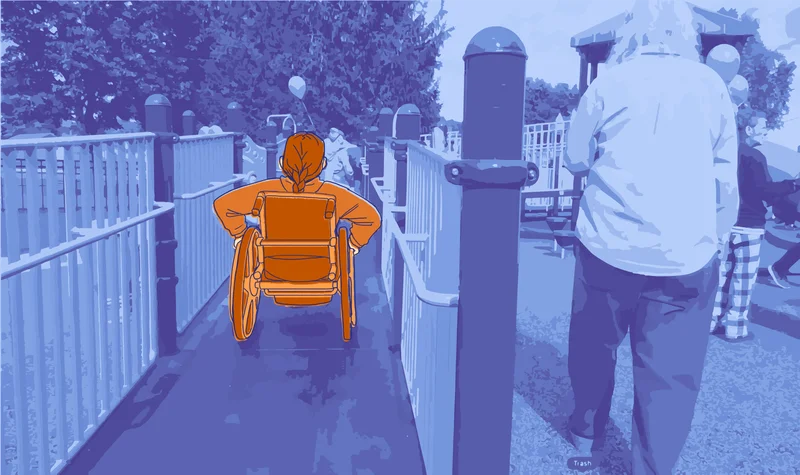
When I look at governmental regulations around playgrounds, I start getting into the same line of questioning. While I'm sure most of these stipulations were created with the best interests of children in mind, I couldn't help but home in on the 2010 ADA Standards manual, specifically section 240, which exempts “amusement attractions” from following the same play-area accessibility requirements as every other playground.
What this basically means is that, when you see a 30-50 foot play structure, one without any wheelchair ramps or properly-placed transfer stations, know that the playground owner isn't violating the Americans with Disabilities Act. What's more, this exemption was created at the request of the IAAPA, an industry organization with deep incentives to keep their play structures underregulated.
The ADA Exemption
In short, a segment of the playground industry asked for a carve-out so that they wouldn't have to comply with federal safety standards. They got it. And while this certainly isn't the only instance of lobbyists steering public policy to their preferred outcome, it's one that hits close to home for me. I think, societally, we've gotten away from the idea that public spaces are meant for everyone. In the context of playgrounds, that's what this idea of accessibility is supposed to be centered around; that no one should be impeded from playing solely based on their ability level. But in the playground world, big industry leaders think they alone should get to decide what “accessibility” truly means.
2010 ADA Standards For Accessible Design
Section 240
240.1 General. Play areas for children ages 2 and over shall comply with 240. Where separate play areas are provided within a site for specific age groups, each play area shall comply with 240.
And that's exactly the point of exempting massive play structures from governmental regulations; they'd never meet ADA accessibility requirements, so, instead of changing the way they're built, the industry helped to change the way they're regulated.
Two Playgrounds, Two Sets of Rules
“Remember who you are truly trying to serve with your playground selection.”

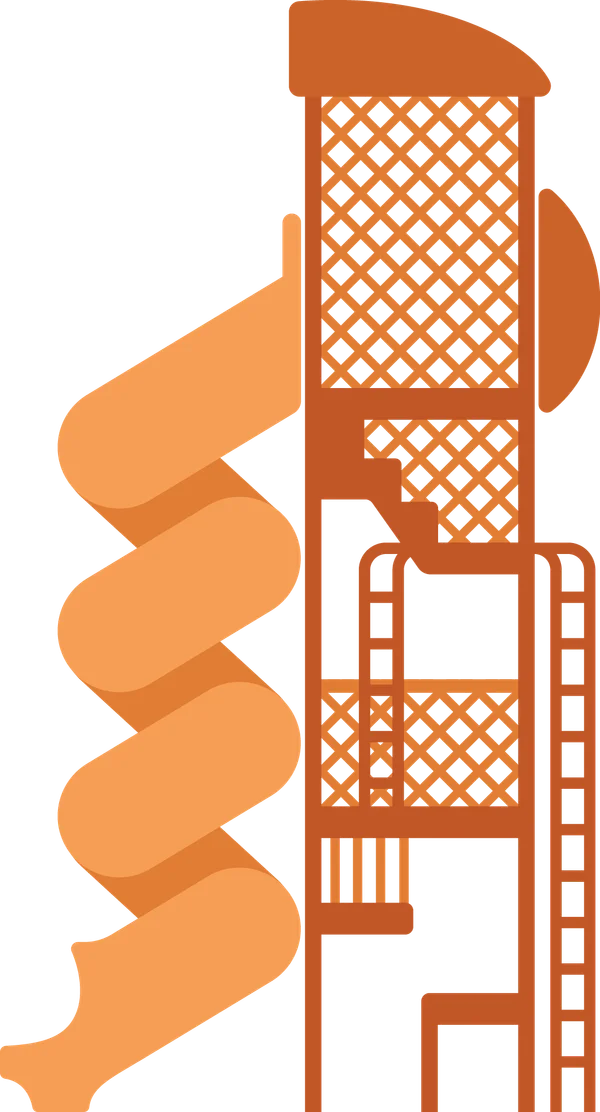
| Accessible Playground | Oversized Structure |
|---|---|
| Ramps and Accessible Routes | Lack of Practical Accessible Routes |
| Practical Transfer Stations Provided | Transfer Station Access is Limited |
| Accessible Platforms Throughout | Features Out of Reach |
| All Kids Can Play Together | Some Kids Left Out of Key Experiences |
Size shouldn't cancel out access.
It's very possible, and in fact easier than the alternative, to build impressive, usable playgrounds that don't skirt the rules set out by the ADA, which ensure that every kid can access and play on public playgrounds. The fundamental purpose of the ADA is to prevent the bifurcated dynamic where one class of society can access public spaces and another can't, and when it comes to playground regulations, this is especially true. If a playground can't be used to its fullest by every kid, it becomes a space for only some kids to have fun, and I don't believe that's what most parents want, regardless of their child's ability level.
We don't have to choose between impressive and inclusive.
At the end of the day, most places want to do whatever they can to make themselves a destination. There are many perfectly valid ways to do this, but compromising the safety of children by installing a gargantuan play structure shouldn't be one of them.

Theory vs. Practice
Theory
- Big play structures make playgrounds a focal point of the community, encouraging people to visit.
- The industry carveout for big play structures makes them easier to market and sell, giving kids around the country the chance to use them.
- The more kids who have access to big play structures, the more fun will be had.
Practice
- Lack of regulations surrounding big play structures means that just about anyone can purchase and install them with minimal oversight.
- When the playground industry got its carveout for big play structures, it allowed them to indirectly endanger kids on playgrounds that have them.
- There's no connection between the size of a play structure and how much fun kids have on it.
Sources
- U.S. Department of Justice. 2010 ADA Standards for Accessible Design, Section 240: Play Areas.
How to Cite This Chapter
Breedlove, Nicolas. “The Accessibility Loophole.” State of Play 2026, Chapter 3, AAA State of Play, August 2026. https://www.aaastateofplay.com/state-of-play/accessibility-loophole/