
Key Findings
- The author argues that injury numbers have not meaningfully declined despite advances in playground safety knowledge.
- Parents and administrators may care about safety without knowing who owns the fix.
- A single, clear point of contact can help get safety concerns reported and repairs completed.
- Standards can define safety. People are the ones who have to deliver it.
Every year, over 200,000 injuries occur on playgrounds across the country1. Ranging from minor cuts and bruises to concussions and broken limbs, these injuries aren’t just statistics; they’re real children with real loved ones who care deeply about their safety.
Why haven’t the numbers moved?
But when you look at the historical injury data from the CDC and other agencies, you’ll notice that the number of injuries hasn’t meaningfully declined since the 90’s2. This is despite numerous advances in technology and overall knowledge surrounding playground safety, as well as the internet making all of these advances more easily accessible.
In fact, rather than readily-available safety knowledge decreasing the number of injuries, the rate of playground-related hospital visits involving traumatic brain injury more than doubled between 2005 and 2013, from about 14,000 to nearly 30,0003.
Within the playground industry, none of these statistics have, at least so far, caused the sort of come-to-Jesus moment that I think is necessary in order to make playgrounds safer. I hope they eventually do, because anything that would keep kids from getting hurt on the playground is ultimately good for kids and for business. As an industry, we should stop shrugging off injury numbers and come up with a plan to reduce them.
However, the playground industry isn’t the only actor to blame here.
Who actually owns playground safety?
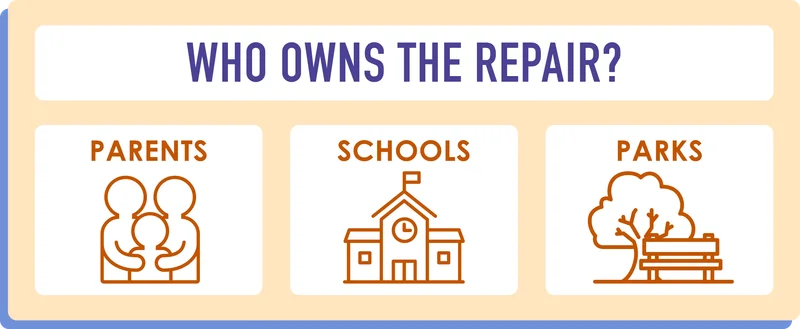
One of the most frustrating parts about playground safety in 2026 is that, in many cases, no one individual owns the fixes to issues that could or already have caused injuries. Too often, nobody steps up and says “Alright, let’s do something about this.” And that’s not for lack of concern. Typically, it’s because people simply don’t know who’s supposed to own the fix.
When I take my kids to the playground, the only reason I know who to call if they get hurt is because I work in the playground industry. Most parents don’t, so if their kid gets hurt, they’re out of luck.
And by “hurt” I don’t mean “tripping over their shoelaces,” I mean “scraped by a loose piece of metal that should’ve been dealt with months ago.”
I’ve talked a lot about the responsibilities of playground owners and operators and how they play a crucial role in keeping spaces safe for kids to use. But the truth of the matter is that, all too often, there’s no one who truly owns playground safety.
In the case of schools, people will often take their concerns to the principal or superintendent, but these folks already have a laundry list of concerns and issues in front of them at any given time. Similarly, parks directors often oversee multiple recreation areas and are stretched thin as is.
One clear point of contact
In my experience, park and school administrators mean well and will do their best to address playground safety issues, but their limited bandwidth hampers their ability to implement the sort of quick, decisive fixes needed to ensure kids’ safety. So the solutions, if they come at all, tend to be slow and imperfect.
I don’t think it’s necessary to revamp the org chart and dedicate an entire team to playground safety. And even if it were, that’s not a viable path for most organizations.
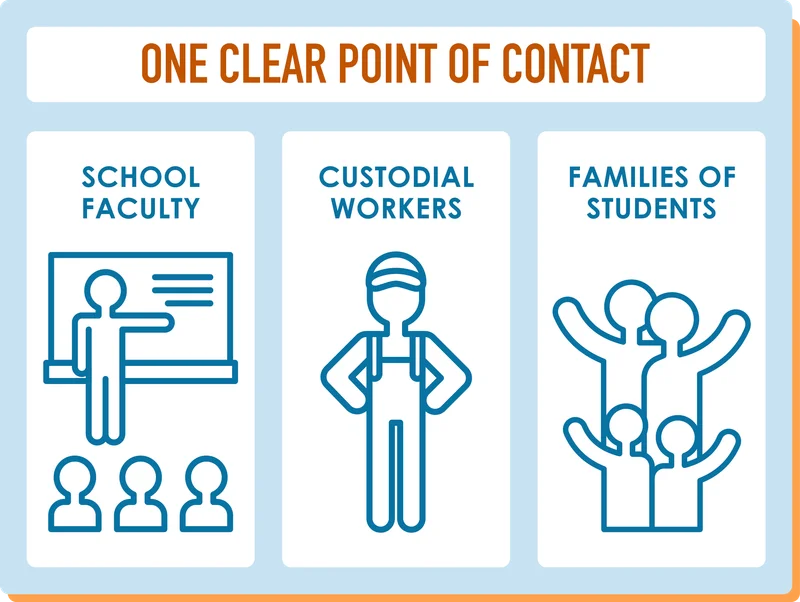
Rather, what most are missing is a single, clear point of contact for playground safety concerns; someone who knows exactly what to do to remedy the issue and who to call if they don’t. This person could be an assistant principal, a custodian, or even a motivated parent.
At the end of the day, every playground needs someone to help ensure its safety. More robust safety standards haven’t moved the needle on playground safety, nor has better education regarding what playground safety entails
In reality, it’s up to playground owners and their teams to close the gap. Even if they lack the knowhow to implement the fixes themselves, they can still reach out to a CPSI, set an appointment to make necessary repairs, and see them through until completion.
Theory vs. Practice
Theory
- The playground industry has made great strides towards improving playground safety, which injury statistics don’t really capture.
- Bringing playground safety concerns directly to the highest person in an organizational ladder will ensure that those concerns are addressed in a timely and effective manner.
Practice
- The fact that the total injury numbers haven’t fallen in over 20 years should be treated as an issue to resolve for the playground industry, rather than a baked-in fact of life
- Organizations with a dedicated playground safety monitor have an easier time getting issues reported and addressed in a timely manner.
Source notes
- U.S. Consumer Product Safety Commission. Injuries and Deaths Associated With Children’s Playground Equipment. April 2001. U.S. Consumer Product Safety Commission Return to reference 1
- U.S. Consumer Product Safety Commission. Injuries and Investigated Deaths Associated with Playground Equipment, 2001–2008. October 29, 2009. Return to reference 2
- Cheng, Tabitha A., et al. “Nonfatal Playground-Related Traumatic Brain Injuries Among Children, 2001–2013.” Pediatrics, vol. 137, no. 6, 2016. Centers for Disease Control and Prevention. CDC Stacks Return to reference 3
How to Cite This Chapter
Breedlove, Nicolas. “Still Getting Hurt.” State of Play 2026, Chapter 9, AAA State of Play, October 2026. https://www.aaastateofplay.com/state-of-play/still-getting-hurt/