
Key Findings
- The author argues that big coverage numbers convey reliability, while genuine manufacturer errors remain an important reason to have a warranty.
- Maintenance requirements can leave owners exposed, especially when paid maintenance packages are not included in the purchase.
- The report emphasizes written logs of inspections, repairs, and routine maintenance as evidence when making a claim.
- A warranty is a guarantee with lots of fine print.

When a manufacturer’s warranty touts 100-year coverage on metal posts, it’s not because they actually expect customers in the year 2126 to make a claim. It’s because 100 is a nice, round number that looks good and instills a sense of reliability.
But playground warranties aren’t totally useless. Genuine manufacturer errors do occur, and it’s important to have a policy that will indemnify customers who, through no fault of their own, receive shoddy equipment.
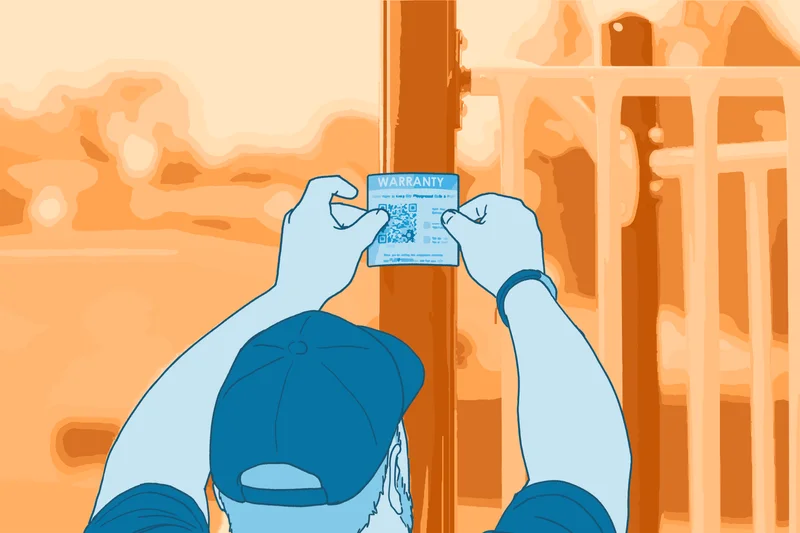
At the same time, anyone who regularly deals with playground warranties will tell you that virtually none of them cover parts that haven’t been properly maintained. In other words, lack of maintenance voids the warranty. This is especially rough for playground owners who were never told what maintaining a playground looks like in practice, or that implementing many refurbishments will, at the very least, require the help of a Certified Playground Safety Inspector (CPSI).
No maintenance = no warranty
The “no maintenance = no warranty” language itself isn’t an issue. When I bought my car, the dealer included a warranty with very similar stipulations. It basically says that if, for instance, I were to drive my car 10,000 miles without getting an oil change, the manufacturer wouldn’t be at fault when it inevitably breaks down. Of course, there are half a dozen auto mechanics within a 25-mile radius of me, so if I fail to change the oil, that’s my fault.
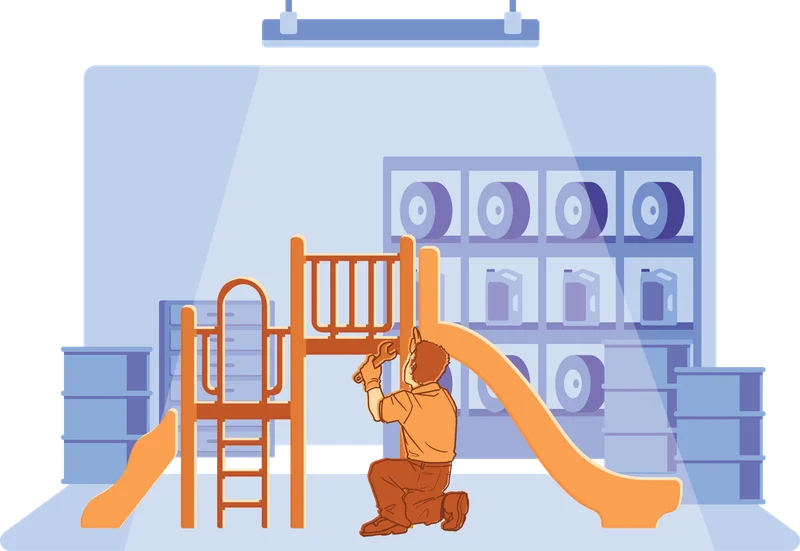
But the problem with applying this logic to playground warranties is that there really is no equivalent to Jiffy Lube for playgrounds. Sure, manufacturers will point buyers to paid maintenance packages, but they almost never include these in the purchase itself. So, a few years down the line after extensive use, when someone discovers an anchoring issue with a play structure or a slide panel becomes detached from its posts, will the warranty actually help? Probably not.
Documenting maintenance
But let’s say you own a playground, and, for years, you’ve been diligent in upkeep, inspections, and regular maintenance. Loose bolts are tightened, old swing chains are swapped out for shiny new ones, and all, it seems, is well.
One day, you notice a swing post coming up from the ground, and you immediately deduce that it’s an anchoring issue.
When it turns out to be irreparable, you call the manufacturer to make a claim. They ask you to submit documentation proving you’ve done the maintenance work you know you’ve done, and you get a sinking feeling upon realizing that nothing was ever written down.

Documentation of maintenance is a prerequisite for any claims that don’t involve manufacturer error. In other words, if the anchoring on a swing set becomes worn and unusable after five years, the manufacturer will expect you to have written logs to ensure you did everything in your power to maintain the swing set.
None of that crucial information is in a typical playground warranty, yet its efficacy is contingent on the customer knowing it.
Burden of proof
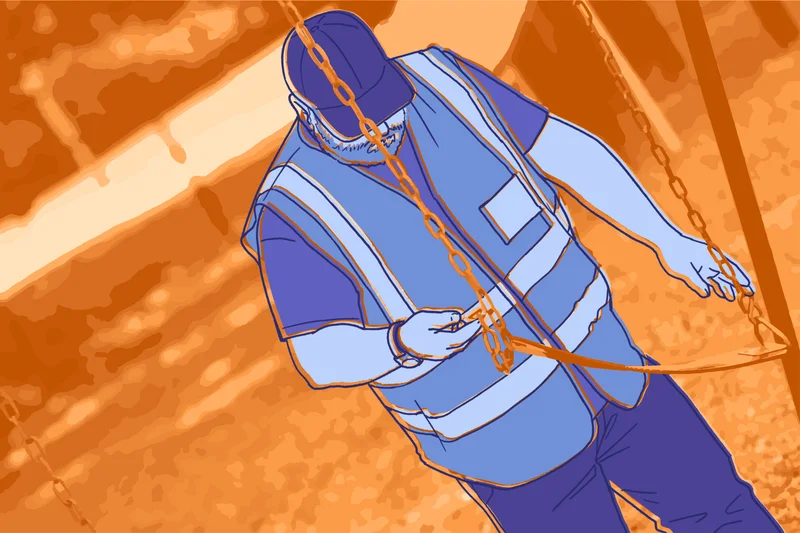
In the legal world, the term “burden of proof” essentially means that it’s on one side to make the case that their version of events is the correct one. In the context of playground warranties, the burden of proof is on the playground owner to show that their equipment failure came about in spite of following best practices surrounding playground safety and maintenance.
And the proof itself is in the records you keep. Think inspections, audits, and routine maintenance. Without a credible paper trail, no manufacturer will take you at your word that your swing anchor malfunctioned despite properly maintaining it. Why? Because you’ll have no evidence that you did anything that could’ve stopped it from happening.
Theory vs. Practice
Theory
- Playground warranties cover most of what a customer could end up needing down the line, especially in the case of worn parts or damage from prolonged use.
- Having a playground warranty helps customers maintain peace of mind knowing that, if something happens, their equipment will be covered.
Practice
- Warranties typically only kick in if genuine manufacturer error is uncovered
- A few years down the line, if a customer tries to make a claim for a moving part (say, a bouncer spring), the customer will need documentation of inspections, repairs, etc. to prove that improper maintenance wasn’t the cause
How to Cite This Chapter
Breedlove, Nicolas. “The Truth About Playground Warranties.” State of Play 2026, Chapter 8, AAA State of Play, October 2026. https://www.aaastateofplay.com/state-of-play/the-truth-about-playground-warranties/