
Key Findings
- The report compares a 336% increase in playground equipment prices with a 99% increase in consumer prices from December 1998 to February 2026.
- Gym and exercise equipment prices rose 56% over the same period, despite sharing steel inputs, transportation, and many customers with playground equipment.
- The author acknowledges rising steel and diesel costs while questioning whether they explain the gap.
- If playground prices keep rising, customers deserve to know why.
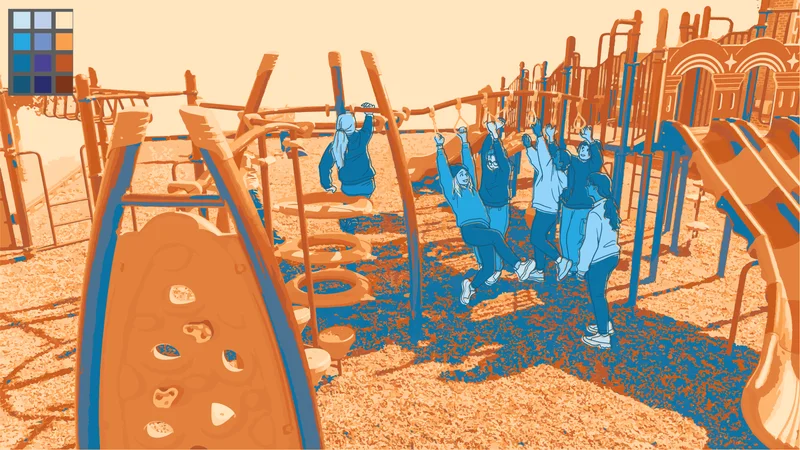
The Bureau of Labor Statistics tracks what manufacturers charge for just about everything they make, including playground equipment. In February 2026, the price index for playground equipment was clocked at 436, meaning that the price of commercial playground equipment has jumped over 300% since the BLS started this series in 1998.1
In short, the price of commercial playground equipment rose more than three times as fast as consumer prices overall2, and no one in the playground industry has been able or willing to explain how that happened.
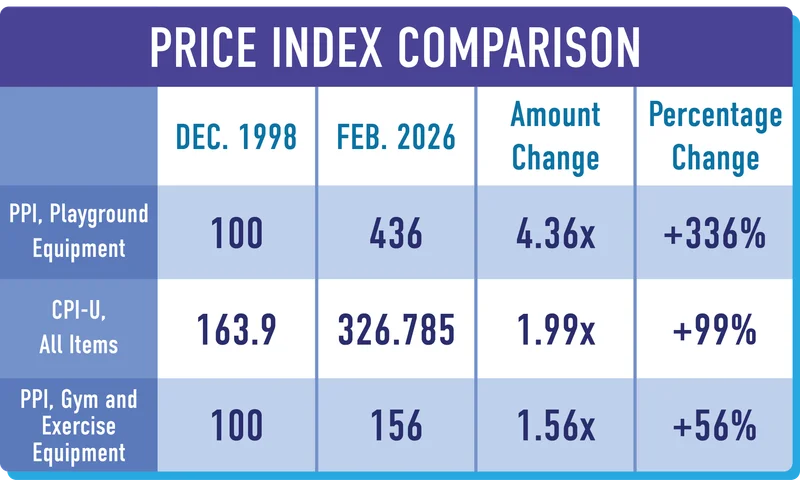
| Index | Dec. 1998 | Feb. 2026 | Amount Change | Percentage Change |
|---|---|---|---|---|
| PPI, Playground Equipment | 100 | 436 | 4.36x | +336% |
| CPI-U, All Items | 163.9 | 326.785 | 1.99x | +99% |
| PPI, Gym and Exercise Equipment | 100 | 156 | 1.56x | +56% |

Manufacturing and prices
Over the same time period, countless other industries have harnessed technology to mass produce and sell their products at a lower price point than ever before.
For instance, my first laptop back in 1998 was a Dell Inspiron 3000, and it cost right around $3,000.
I distinctly recall that laptop being a real piece of junk. Sometimes it just wouldn’t boot up, and when it did, it was incredibly slow. Nevertheless, the laptop itself was a marvel of modern technology, and, at the time, the $3,000 price point seemed justified considering just how bulky and unwieldy computers of the recent past had been.
Nowadays, you can get a cheaper, faster, and more reliable laptop fairly easily. Advances in computing and manufacturing have made it possible to mass produce computers and sell them at a price that most people can afford.
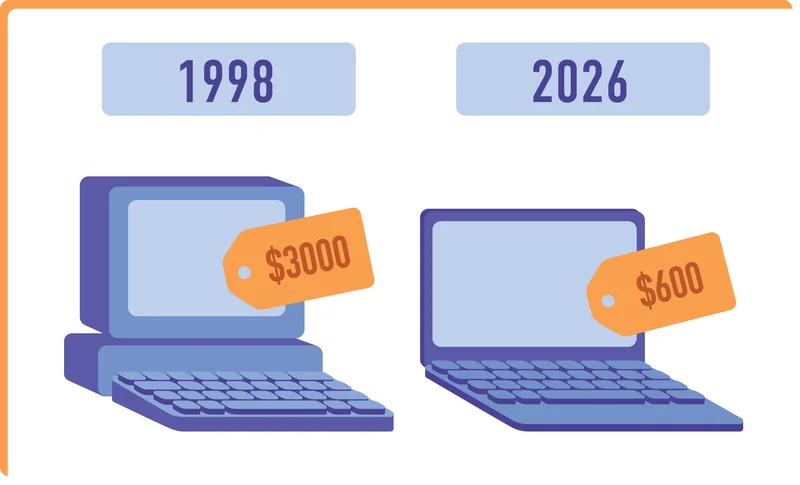
So, when I think of how the playground industry has changed over the past 30 years, I think it’s easy for one to wonder why the cost of equipment has drastically increased in the face of so many other industries producing cheaper goods.

Part of it comes down to customers not truly understanding what goes into manufacturing, shipping, and installing playgrounds. Take steel, for instance. It’s easily the most ubiquitous raw material in playground equipment, and it’s gotten a lot more expensive. The BLS price index for steel mill products is up about 41% in the last two years, and most of that came after the tariff on imported steel went to 50% in June 2025.3,4 So even domestic playground manufacturers have taken a hit.
Then you have transportation.
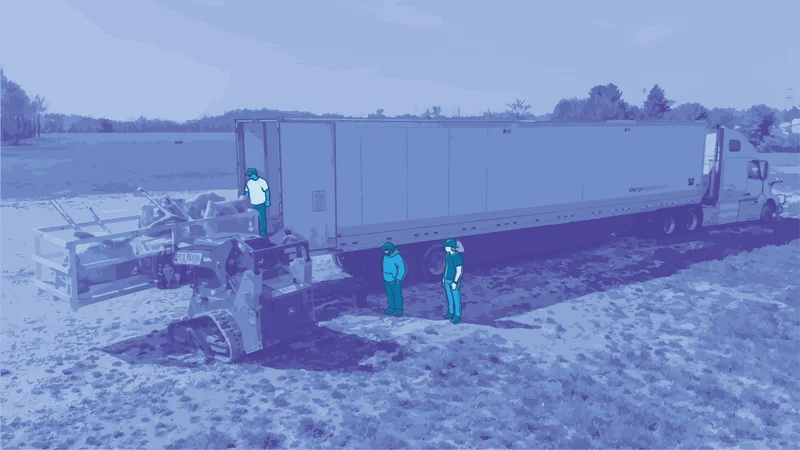
Most playground equipment gets from point A to point B via diesel-fueled trucks, and companies have had to pass on the increasing cost of diesel fuel to the customer. This has come in the form of shipping surcharges and even across-the-board price increases. Any way you slice it, rising fuel costs equate to more expensive playgrounds. Diesel averaged about $6.18 a gallon in mid-October 2026, up more than $2.50 from 2025.5
Those costs are real. But here’s what gets me. The BLS also tracks gym and exercise equipment, starting the same month it started tracking playgrounds. That stuff is mostly steel too, it rides on the same diesel trucks, and plenty of the same schools and park districts buy it. Its prices went up 56% over the same stretch.6 Playground equipment went up 336%.
So you’ve got the same raw material, the same trucks, and a lot of the same customers, and one of them went up six times as much as the other. I’d love for someone to explain that to me.
Still, the fact that most people don’t really have a frame of reference for the cost of playground equipment makes it easier for the playground industry to increase prices.

To be clear, there’s nothing inherently nefarious about price increases.
In just about any business, they’re a fact of life. Still, I don’t think the playground industry has ever had a reckoning with the fact that so many others have managed to produce cheaper, better-quality products. Meanwhile, playground equipment costs more than four times what it did in 1998, and no one’s been able to explain why.
Has the overall quality of playground equipment improved over the last few decades? Sure. But, to me, it’s troubling that there hasn’t been even an attempt to explain the sort of markups that many playground companies attach to the products they sell, particularly when it’s easier than ever to mass produce them.
Part of why the industry has no real incentive to lower prices is that schools and local governments will keep buying playground equipment as long as they continue to get federal and state funding for it. And I’m not saying that’s a bad thing; on the contrary,
I’m glad that my kids’ school has money for a decent playground, and this system is something my company and I benefit from too.
I don’t have a magic fix for the lack of transparency around prices, but I do think it’s time our industry started showing customers why playground equipment costs what it does. If the gym equipment folks can keep their prices in check, the least we can do is explain ours.
Theory vs. Practice
Theory
- Manufacturing playground equipment has become easier and less time-intensive over the years, which should mean lower prices and more convenience for the end user
- Playgrounds are easier than ever to customize, which helps justify the increased price point.
Practice
- The playground industry has yet to catch up with others that produce better and cheaper goods more efficiently than they did 20 years ago
- Gym equipment is made of the same steel and ships on the same trucks, and it went up 56% while playgrounds went up 336%
- Most customers don’t really know how much playground equipment is supposed to cost because most don’t understand what goes into the finished product.
Source notes
- U.S. Bureau of Labor Statistics, Producer Price Index by Commodity: Playground Equipment (WPU15120185), via FRED: https://fred.stlouisfed.org/series/WPU15120185 Return to reference 1
- U.S. Bureau of Labor Statistics, Consumer Price Index for All Urban Consumers: All Items (CPIAUCNS), via FRED: https://fred.stlouisfed.org/series/CPIAUCNS Return to reference 2
- U.S. Bureau of Labor Statistics, Producer Price Index by Commodity: Steel Mill Products (WPU1017), via FRED: https://fred.stlouisfed.org/series/WPU1017 Return to reference 3
- Proclamation 10947, Adjusting Imports of Aluminum and Steel Into the United States, Federal Register, June 9, 2025: https://www.federalregister.gov/documents/2025/06/09/2025-10524/adjusting-imports-of-aluminum-and-steel-into-the-united-states Return to reference 4
- U.S. Energy Information Administration, Gasoline and Diesel Fuel Update, U.S. on-highway diesel, week of October 12, 2026: https://www.eia.gov/petroleum/gasdiesel/ Return to reference 5
- U.S. Bureau of Labor Statistics, Producer Price Index by Commodity: Gymnasium and Exercise Equipment (WPU15120192), via FRED: https://fred.stlouisfed.org/series/WPU15120192 Return to reference 6
How to Cite This Chapter
Breedlove, Nicolas. “The Price of Play.” State of Play 2026, Chapter 10, AAA State of Play, October 2026. https://www.aaastateofplay.com/state-of-play/the-price-of-play/