

What time does school start for your children? Across the United States, the average public school start time is 8:03 a.m., and many students begin their school day earlier than the 8:30 a.m. start time recommended by the CDC for middle and high school students. In 42 U.S. states, 75% to 100% of public schools start before 8:30 a.m., leaving many students with less time for sleep, morning routines, and active play before entering the classroom.
Early school start times affect more than the morning commute. They can influence student sleep, school readiness, academic performance, family schedules, transportation planning, and opportunities for physical activity. While playground equipment, recess, and outdoor movement support children’s physical and social development, the structure of the school day often determines how much time students actually have to move, play, and arrive prepared to learn.
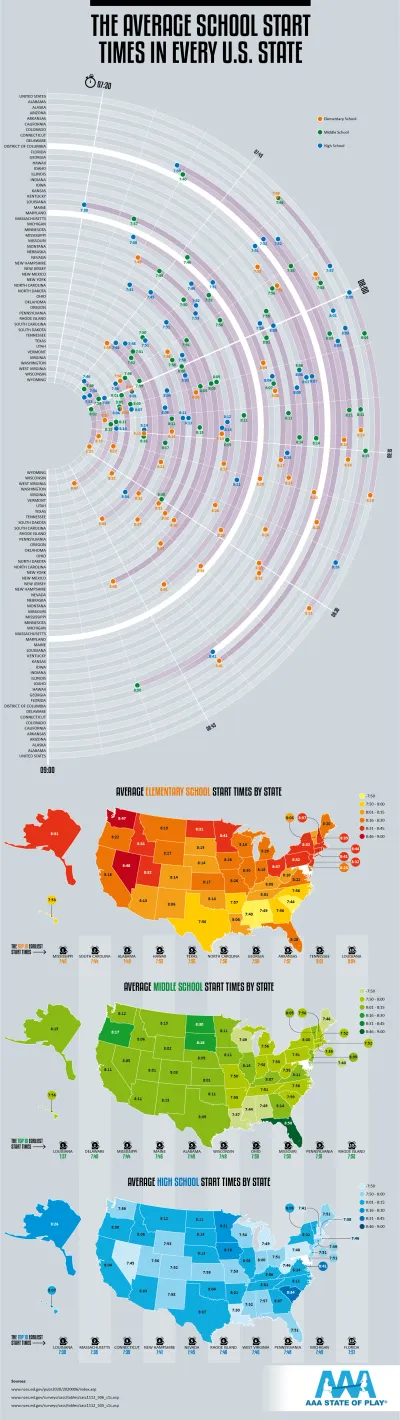
To better understand how early students begin the day, the team at AAA State of Play analyzed average school start times by state for elementary, middle, and high schools. The data shows which states start the earliest, which start the latest, and how school schedules compare across grade levels.
What State Has the Earliest School Start Times?
For both middle school start times and high school start times, Louisiana is the earliest state, at 7:37 a.m. and 7:30 a.m. respectively. The earliest elementary school start time is in Mississippi, at 7:40 a.m.!
The team at AAA State of Play has conducted an analysis of school start times in the United States to shed light on where students are rising the earliest and latest. Check it out:
Embed this image on your site:
<a href="/the-average-school-start-times-in-every-state/"> <img src="/api/img?url=%2Fmedia%2Fwysiwyg%2Fschool-start-time-4.png" alt="The Average School Start Times in Every U.S. State" title="The Average School Start Times in Every U.S. State - AAAStateofPlay.com - Infographic"></a><br><a href="https://www.AAAStateofPlay.com" </a>
Here are the top five states with the earliest elementary school start times:
Mississippi: 7:40
South Carolina: 7:44
Alabama: 7:49
Hawaii: 7:53
Texas: 7:56
Here are the top five states with the earliest middle school start times:
Louisiana: 7:37
Delaware: 7:40
Mississippi: 7:44
Maine: 7:46
Alabama: 7:49
Here are the top five states with the earliest high school start times:
Louisiana: 7:30
Connecticut: 7:39
Massachusetts: 7:38
New Hampshire: 7:41
Nevada: 7:45
Why Does School Start So Early? Hint: It’s Not to Get The Kids Early Recess Time on the School Playground Equipment
Why do American schools start so early? And why does school start at 7 a.m.? These are common questions surrounding the extreme school start times in the United States. The main contributor isn’t what you might think and has little to do with getting the kids out and active on the commercial playground equipment as soon as possible. The reason for early school start times is due to busing. Many school districts use the same fleet of buses to pick up and drop off students across all grades, which creates the need to stagger the school schedules, often pushing average high school start times to early hours.
Are High School Students Sleep-Deprived?
Absolutely. More than 2 out of 3 high school-aged adolescents do not get enough sleep, and the problem is escalating.
What Percentage of Students Are Sleep-Deprived Overall?
A study by the National Sleep Foundation found that 87% of high school students and 59% of middle school students get less than the recommended amount of sleep daily on school nights.
Why Should Schools Swing Towards Later Start Times
There are many advocates for later school start times, including the Centers for Disease Control and Prevention, which points out that better health is one of the biggest benefits of later school start times. According to the CDC, a lack of sleep is associated with several health risks, including weight gain, drinking alcohol, smoking, using drugs, and poor academic performance. The CDC also strongly recommends time for active play, like playground swingsets, that promote activity in school children. Swing sets and playground structures that promote physical activity are excellent to combat the downsides of being sedentary in the classroom.
Furthermore, the American Academy of Pediatrics has issued a recommendation that middle and high school students should start school at 8:30 a.m. at the earliest to give them enough time for rest. This opinion states that insufficient sleep is a significant public health issue that can severely impact the health, safety, and academic success of students. Optimal levels of sleep can protect physical health and mental health (such as by lowering rates of depression), reduce unsafe behaviors (drowsy driving), boost academic performance, and improve overall quality of life.
Another neuroscience study has concluded that a 10 a.m. school start time improved the overall health and performance of students aged 13-16, leading to higher student attendance, better test scores, and improved sleep quality and duration.
Why Should School Start Early? How Does School Start Time Factor into the Merry-go-Round of Life
What about the benefits of early school start times? One of the biggest concerns about shifting school start times is conflict with parent work schedules. If school were to start around 9 a.m., many parents and caregivers would struggle to balance preparing their child for school and getting them there with getting themselves to work on time. Unless there is a before-care program that would take the kids out to the merry-go-round on the school playground before the start of the school day, many parents would struggle to accommodate a later start time.
Transportation logistics is another issue: Many school districts use the same buses for all grades, creating a need for staggering the pick-up and drop-off schedules. Extracurricular activities may also suffer from later school start times — if school ends later, extracurricular activities such as sports and clubs would end later, too, cutting into time that could be spent studying, doing homework, and socializing.
Here is some additional reading about early school start times’ pros and cons:
How Much Does a Later School Start Time Help (or Hurt)? Teachers and Experts Weigh In — We Are Teachers
How Would Later School Times Affect Sleep? — Sleep Foundation
Pros and Cons of Later Start Times — Everett Public Schools
Teens Get More Sleep, Show Improved Grades and Attendance With Later School Start Time, Researchers Find — University of Washington
Later School Start Times More Popular, But What Are the Drawbacks? — National Education Association
Three Reasons to Consider Later Start Times — Robert Wood Johnson Foundation
High School Start Times by State
State
Average Start Time
Alabama
7:57
Alaska
8:26
Arizona
8:03
Arkansas
8:01
California
8:04
Colorado
7:52
Connecticut
7:39
Delaware
7:51
District of Columbia
8:41
Florida
7:51
Georgia
8:07
Hawaii
8:07
Idaho
8:06
Illinois
8:08
Indiana
8:00
Iowa
8:16
Kansas
7:59
Kentucky
8:06
Louisiana
7:30
Maine
7:51
Maryland
Insufficient data
Massachusetts
7:38
Michigan
7:49
Minnesota
8:21
Mississippi
7:52
Missouri
7:53
Montana
8:12
Nebraska
8:13
Nevada
7:45
New Hampshire
7:41
New Jersey
7:51
New Mexico
7:58
New York
8:02
North Carolina
8:11
North Dakota
8:11
Ohio
7:51
Oklahoma
8:04
Oregon
8:08
Pennsylvania
7:48
Rhode Island
7:46
South Carolina
8:34
South Dakota
8:14
Tennessee
8:01
Texas
8:07
Utah
7:56
Vermont
8:06
Virginia
8:14
Washington
7:59
West Virginia
7:46
Wisconsin
7:54
Wyoming
7:53
Middle School Start Times by State
State
Average Start Time
Alabama
7:49
Alaska
8:15
Arizona
8:11
Arkansas
7:58
California
8:11
Colorado
8:03
Connecticut
7:55
Delaware
7:40
District of Columbia
Insufficient data
Florida
8:50
Georgia
8:14
Hawaii
7:56
Idaho
8:06
Illinois
8:14
Indiana
7:58
Iowa
8:11
Kansas
8:01
Kentucky
8:07
Louisiana
7:37
Maine
7:46
Maryland
Insufficient data
Massachusetts
7:52
Michigan
7:56
Minnesota
8:11
Mississippi
7:44
Missouri
7:50
Montana
8:15
Nebraska
8:05
Nevada
8:05
New Hampshire
7:56
New Jersey
8:05
New Mexico
8:13
New York
8:00
North Carolina
7:58
North Dakota
8:30
Ohio
7:50
Oklahoma
8:11
Oregon
8:17
Pennsylvania
7:51
Rhode Island
7:52
South Carolina
7:59
South Dakota
8:16
Tennessee
7:56
Texas
8:05
Utah
8:01
Vermont
8:05
Virginia
8:11
Washington
8:12
West Virginia
7:58
Wisconsin
7:49
Wyoming
8:02
Elementary School Start Times by State
State
Average Start Time
Alabama
7:49
Alaska
8:31
Arizona
8:13
Arkansas
7:57
California
8:16
Colorado
8:14
Connecticut
8:41
Delaware
8:23
District of Columbia
Insufficient data
Florida
8:20
Georgia
7:56
Hawaii
7:53
Idaho
8:31
Illinois
8:30
Indiana
8:19
Iowa
8:26
Kansas
8:17
Kentucky
8:08
Louisiana
8:04
Maine
8:20
Maryland
Insufficient data
Massachusetts
8:35
Michigan
8:29
Minnesota
8:41
Mississippi
7:40
Missouri
8:26
Montana
8:19
Nebraska
8:14
Nevada
8:48
New Hampshire
8:37
New Jersey
8:32
New Mexico
8:06
New York
8:32
North Carolina
7:56
North Dakota
8:31
Ohio
8:37
Oklahoma
8:14
Oregon
8:22
Pennsylvania
8:32
Rhode Island
8:44
South Carolina
7:44
South Dakota
8:15
Tennessee
8:01
Texas
7:56
Utah
8:32
Vermont
8:06
Virginia
8:22
Washington
8:47
West Virginia
8:10
Wisconsin
8:19
Wyoming
8:27
School start times vary widely by state and grade level, but the larger issue is the same across the country: school schedules shape how children sleep, travel, learn, and move throughout the day. Earlier start times may help districts manage buses, parent work schedules, and extracurricular activities, but they can also create challenges for students who need more sleep and more time to prepare for the school day.
Later start times may support better rest, attendance, alertness, and academic performance, especially for middle and high school students. At the same time, districts must weigh transportation costs, family schedules, after-school activities, and supervision needs before making major changes.
Whether a school starts before 8 a.m. or closer to 9 a.m., student well-being should remain part of the planning conversation. Sleep, classroom readiness, outdoor play, recess, and access to safe school playground equipment all contribute to a healthier school day. Understanding the average school start times in every state gives parents, educators, and administrators a clearer starting point for evaluating what works best for students.