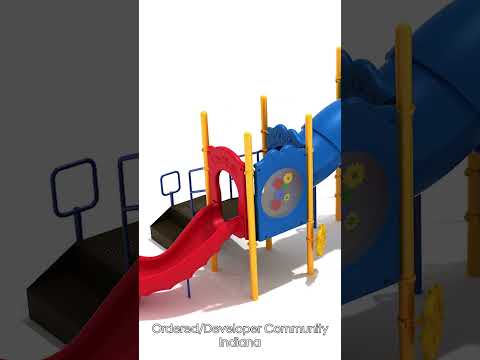

Five customization levers do most of the work: theming to local identity, choosing a purposeful play theme, building inclusion into the core design, custom colors and branding, and zoning for more than young children. All five are available within standard commercial systems, which matters because custom fabrication and custom configuration are different things with different costs.
This guide is for city planners, school administrators, and neighborhood committees who want a playground that doesn't look like every other playground. You'll get where customization pays off, how to gather community input that's actually usable, and the compliance boundary custom work has to stay inside.
Design around local identity
The playgrounds people remember feel like they belong where they are. Landscape, industry, and local history all translate into equipment choices without needing a one-off fabrication.
The translations are usually straightforward. A desert community can use sandstone color palettes with rock climbers and cactus-shaped panels. A forested region can lean on log balance elements and treehouse-style decks. A town with a railroad history can anchor the space with a play train. None of those require inventing new equipment; they're color, theme, and configuration choices applied to standard components.
Local pride features are the cheapest customization available. A town emblem, school mascot, or signature color on entry signage and panels costs a fraction of an equipment change and does more for community ownership than most structural decisions.
Choose a theme with a purpose
A theme works when it gives children a story to play inside rather than just a decorative skin. Castles, ships, jungle settings, and space stations all suggest roles, which is what drives the pretend play that develops cognitive flexibility.
Match the theme to the community's character rather than to what's trending. Themed playgrounds tied to something local, whether that's history, landscape, or an institution, hold up better over a 15- to 20-year service life than a theme chosen because it looked good in a catalog.
Educational themes are worth considering where there's an academic tie. Interactive panels with gears, pulleys, and simple circuits, or climbing components arranged around a science concept, put learning into the equipment without turning recess into a lesson.
Build inclusion into the core design
Meeting the Americans with Disabilities Act is the floor, not the goal. The 2010 ADA Standards for Accessible Design require accessible routes into play areas and a set number of accessible ground-level play components based on the elevated components present, and a design can satisfy that while still leaving some children at the edge of the action.
Three features move a playground past compliance:
Ramps and transfer platforms that provide full access to the structure rather than access to one entry point.
Sensory walls and ground-level panels with texture, sound, and color for children with sensory processing differences.
Quiet zones with shade and softer surfacing for children who need to step out of the stimulation without leaving the playground.
Multi-user equipment is what makes inclusion social. Swings that accommodate mobility devices, ground-level musical elements, and accessible and inclusive equipment that two children use together produce interaction, while parallel separate features produce proximity. Those are different outcomes.
Custom colors and branding
Color is the highest-impact, lowest-cost customization on any playground. Commercial equipment is powder-coated, so palette selection is usually a specification choice rather than an upcharge.
Two considerations should shape the palette. Bright primaries read as play equipment and appeal to younger children, while earth tones integrate better into natural settings and park landscapes. Surface temperature is the practical constraint, since darker colors absorb more heat and get hotter to the touch on slides and decks, which limits usable hours in summer.
Branding works best on the elements around the equipment. Logos and mascots on entry signage, themed entryways, and custom banners unify the space with an institution's identity without complicating the structure itself.
Zone for more than young children
The strongest community playgrounds function as small parks. Designing for caregivers, teens, and older adults turns a play area into a destination that gets used through the whole day.
Four zones cover most of that range:
A preschool zone with low platforms and ground-level features for ages 2 to 5.
An adventure zone with climbing towers and obstacle elements for ages 5 to 12.
A fitness area for teens and adults, where adult fitness equipment extends the site's user base considerably at modest cost.
Seating and gathering space, since outdoor park furniture with benches, tables, and shade determines how long families stay.
Intergenerational features are the connective tissue. Giant chess or checkers, sensory gardens, and shared musical elements invite participation from grandparents and teenagers alike, and they cost less than another play structure.
Keep customization inside the safety standards
This is the part custom projects get wrong. Themed and custom components still have to meet ASTM F1487, including entrapment openings under 3.5 inches or over 9 inches, protrusion limits, and use zone requirements around every feature.
Ask one specific question before approving a custom element: is this component certified, or is it a one-off fabrication? Manufacturer catalog components carry IPEMA third-party certification, while bespoke fabrication may not, and an uncertified custom piece becomes a documentation problem during inspection and after an incident. Configuration customization, meaning color, theme, layout, and component mix within a certified system, gets you most of the distinctiveness with none of that risk.
Build extra time into the schedule too. Custom colors and themed components carry longer lead times than stock configurations, so a spring opening usually means deciding the previous fall.
Gather community input you can actually use
Open-ended input produces wish lists nobody can build. Structured input produces a scope.
Ask three specific questions instead of asking what people want:
Which age groups need to be served, ranked by priority?
Which two or three local elements should the design reference?
What does the community need that the current space doesn't provide, whether that's shade, seating, accessible play, or something for teenagers?
Bring renderings to the second meeting rather than the first. A drawing narrows a conversation that a blank page keeps open, and it's also the document that wins a board vote or a grant application.
Design a playground that reflects your community with AAA State of Play
Customization that lasts comes from local relevance, inclusive design, and layout choices, all within certified commercial systems. AAA State of Play works with municipalities, schools, parks departments, and neighborhood groups on themed equipment, color selection, accessible design, and multi-zone layouts built for the community that will use them. Get in touch with us today!